Author: Tohrran Hamilton, Intern, and Yvette Pino, Curator
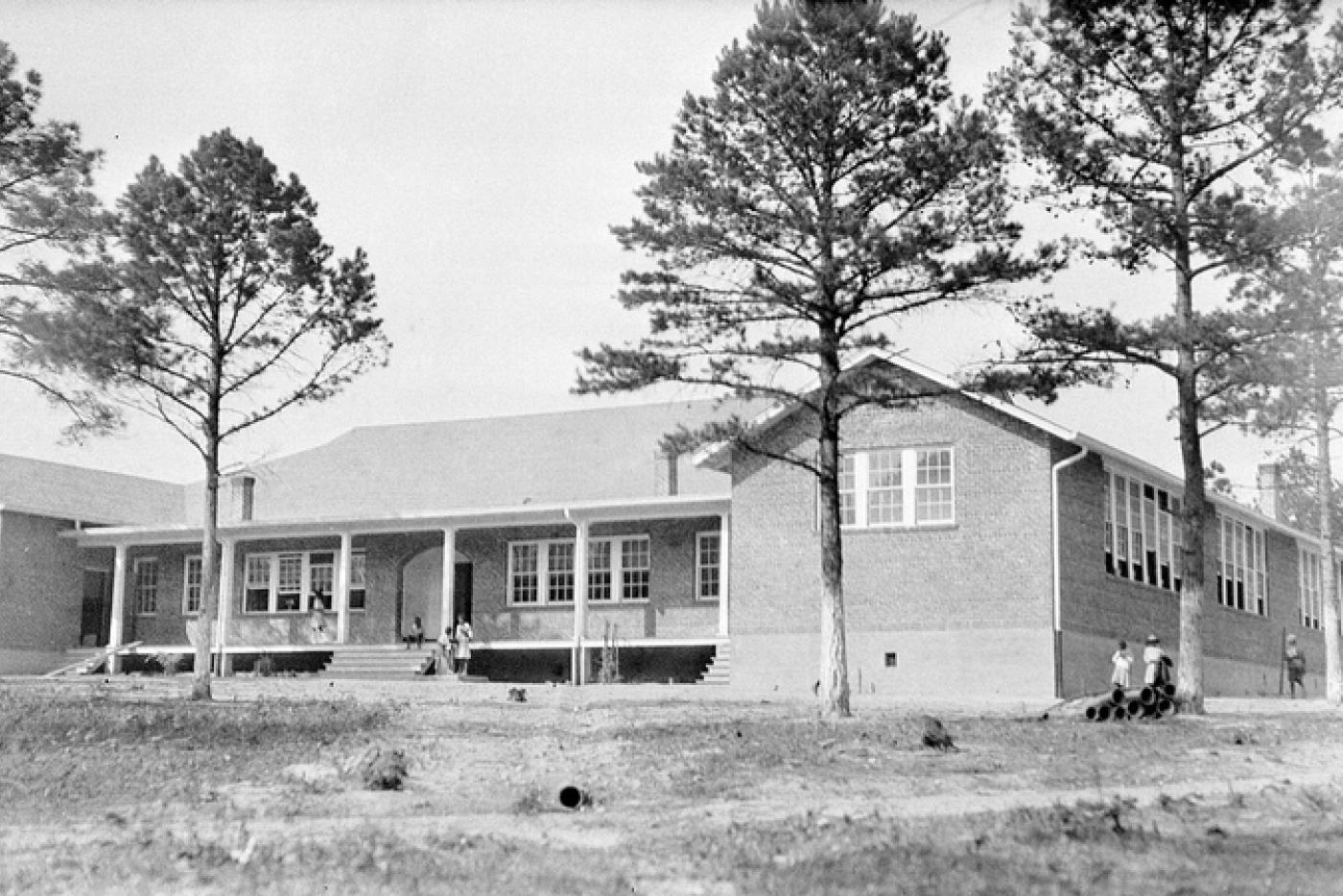
In the early 20th century, educational opportunities for Black children across the rural South were deeply unequal. Across many Southern states, including North Carolina, African American students often attended schools that were underfunded, poorly constructed, and without basic resources. In many cases, children would meet in fields, churches, old homes, and cabins that lacked electricity, heat, or running water, just to have the opportunity to learn. For decades, the Black community pushed for better education opportunities for their children, creating campaigns for building individual schools.
The Tuskegee Institute—located in Tuskegee, Alabama—started many of these campaigns to support community-based learning in the early 1900s. Booker T. Washington—author, educator, and the founder of the Tuskegee Institute, who had been born into slavery—led the way.
In 1912 Washington reached out to German-Jewish philanthropist and Sears, Roebuck and Company president Julius Rosenwald. Washington proposed that Rosenwald fund the construction of six school buildings in Tuskegee for Black students. Rosenwald agreed to help fund the schools if the communities receiving them contributed to the funding and maintenance of the buildings.
The Rosenwald Fund, also known as the Rosenwald School Program, was founded in 1917. It aided in the construction of around 5,350 school buildings and related structures for Black children in the South. North Carolina was home to 813 of the structures, which included school buildings and housing for teachers—the most of any state.
Because communities were required to provide matching funds, many were determined to give what they could and ensure that access to education also meant access to a suitable environment where the students could excel.
That often came in small monetary amounts, land donations, or labor and building supplies. Historian James Leloudis notes that rural Aberdeen day laborers rallied to raise $425 to motivate the Division of Negro Education to build a school in Moore County.
In a 2022 WALTER magazine article, Ella Perry reminisced about her father telling her stories about the building of Panther Branch Rosenwald School in Wake County. She said the community worked together. Her father would talk about the men in the community who built the school; timber came from her uncle’s farm, and neighbors donated nails and other building materials.
Like the initial fundraising efforts that helped open these schools, community members today band together to restore and transform historic North Carolina Rosenwald School houses. Perry, an alumna and former teacher at Panther Branch, championed a decades-long restoration effort that was completed in 2022. Her astute efforts to preserve historic artifacts also led Perry to donate the original Deacon’s Chair from the historic Juniper Level Baptist Church. The church currently owns the school. The chair was accessioned into the museum’s collection in 2014. Other successful restoration efforts around the state include the Russell School in Hillsborough, Siloam School in Charlotte, and the Mars Hill Anderson Rosenwald School in Asheville.
In addition to renovation projects, communities across the state coordinate efforts to install site-specific State Historic Markers indicating the historic value of the schools. In March 2018, alumni of the Brown Summit School did just that. Alumna Doris Settle Maxwell requested the marker placement after research into her former school’s history. Joined with other alumni, Settle Maxwell researched, raised money, and unveiled the historical marker on March 29, 2018, with 75 people in attendance.
The North Carolina Museum of History has several objects in the collection with direct ties to North Carolina Rosenwald schools. For example, these exercise dumbbells, circa 1930, were from the Brown Summit School.

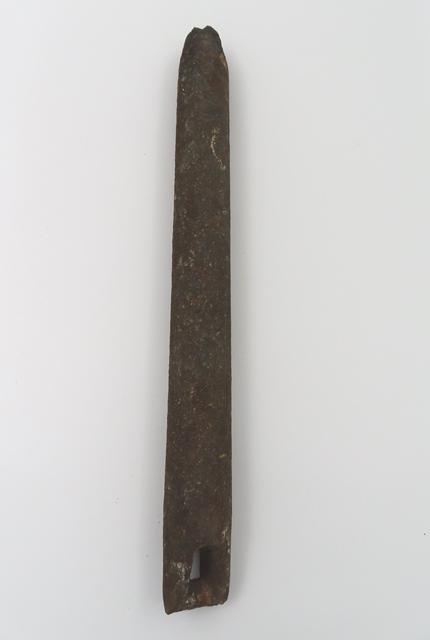
The Rosenwald schools became iconic landmarks because of the efforts that raised them. They also reflect the deliberate architectural vision of Tuskegee Institute professors. Wilmington native Professor R. R. Taylor was the director of Mechanical Industries. Wilmington Beach native Professor W. A. Hazel was from the Division of Architecture. Their first plans included a large grouping of 3 x 3 paned, double-hung windows to keep the rooms bright and well ventilated. Although the plans would be modified later, the standardized use of these windows was paramount. Within our collection, the museum has a counter-weight sash for use on a six-up, six-down type double-hung window. The 1931 sash is from Apex Elementary School.